

.svg)

Back to all articles
The State of Caregiving in America
The aging of America is accelerating. So is the demand for care — and we're not ready
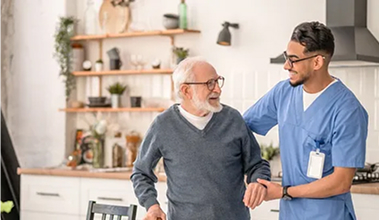
This is the first in a three-part series exploring the state of caregiving in the U.S.—from demographic trends and economic pressure, to the realities family caregivers face every day.
Every day, 10,000 Boomers retire in the U.S. By 2037, over 80.9 million people will be 65 or older—a 34% increase from 2022. Many will live longer, but not necessarily healthier, lives. Chronic illnesses like diabetes and heart disease are on the rise, and our healthcare infrastructure is already showing strain.
The demand for care is intensifying. But the supply? That’s dwindling.
We’re facing a professional caregiving shortage, driven by:
- High turnover and burnout
- Low wages that fail to reflect the difficulty and importance of the work
- Immigration policy uncertainty—especially critical since a third of professional caregivers are immigrants
At the same time, federal funding is falling short. Medicaid may see a $1T reduction over the next ten years - a staggering sum, which would eliminate hundreds of thousands of healthcare jobs and further hollow out Home and Community-Based Services (HCBS). This will shift even more responsibility—financial, logistical, and emotional—onto families. Likewise, we must strengthen our professional caregiving workforce—so they’re equipped to support families and communities as effectively as possible.
This is all unfolding against the backdrop of a rising chronic disease burden—one that’s growing not just in prevalence, but in complexity. As multiple conditions begin to layer on top of each other, care becomes exponentially harder to manage—and more expensive to deliver. Already, over 40% of older adults are considered obese, and 60% live with hypertension. These aren’t isolated issues—they’re compounding realities that demand more from every part of the system.
Meanwhile, 93% of Americans over 55 say they’d prefer to age at home. Aging in place is usually more affordable, preserves independence, and maintains connection to community. But it also depends heavily on informal support networks—and that means family caregivers are being asked to do more than ever.
One bright spot is the rise of digital health tools, expanding what’s possible in both clinical and home-based care. These include:
- 🩺 Remote monitoring for chronic conditions
- 💻 Telehealth and virtual consults
- 📱 Wearables and sensor-based alert systems
- 📊 Care coordination platforms to manage medications, appointments, and care plans
- 🧠 AI-powered insights that flag early warnings and guide follow-up
- 🗂️ Family-facing apps that centralize tasks, track changes, and streamline communication across informal care teams
The pandemic accelerated adoption—but the real challenge is designing tools that meet families where they are: in the messiness of real life, with limited time, uneven resources, and evolving care needs.
We don’t just need tools for clinicians.
We need platforms built for caregivers.
But technology alone won’t solve this. While new service models and care delivery platforms are emerging, they exist in a system that hasn’t evolved to meet today’s realities. What we need isn’t just innovation—we need infrastructure. We need policies that recognize, fund, and structurally support care across both clinical and home settings.
Because the care crisis isn’t coming someday. It’s already here.
Up next: a closer look at the unpaid caregiving workforce, and why their contributions—valued at over $600 billion—remain so invisible.
Join me on my Substack: Caregiving, Practically Speaking, for more stories, tools, and truths from the frontlines of caregiving.
.jpeg)
When the Healthcare System Relies on Invisible Labor
The unseen coordination work that makes medical care possible

Unpaid, Undervalued, Unseen: The Economic & Emotional Toll on Family Caregivers
Up to 1 in 3 Americans are caregivers, often without recognition, support, or pay. Many are mentally, emotionally, physically, and financially drained.

Sandwich Generation or Iron-Vise Generation?
From flute lessons to colonoscopies, the daily squeeze of dual caregiving is anything but soft.
%201%20(1).svg)


.png)
.png)