


Back to all blogs
How Being Gay Taught Me to Care Without a Map
On chosen family, hard conversations, and showing up without directions
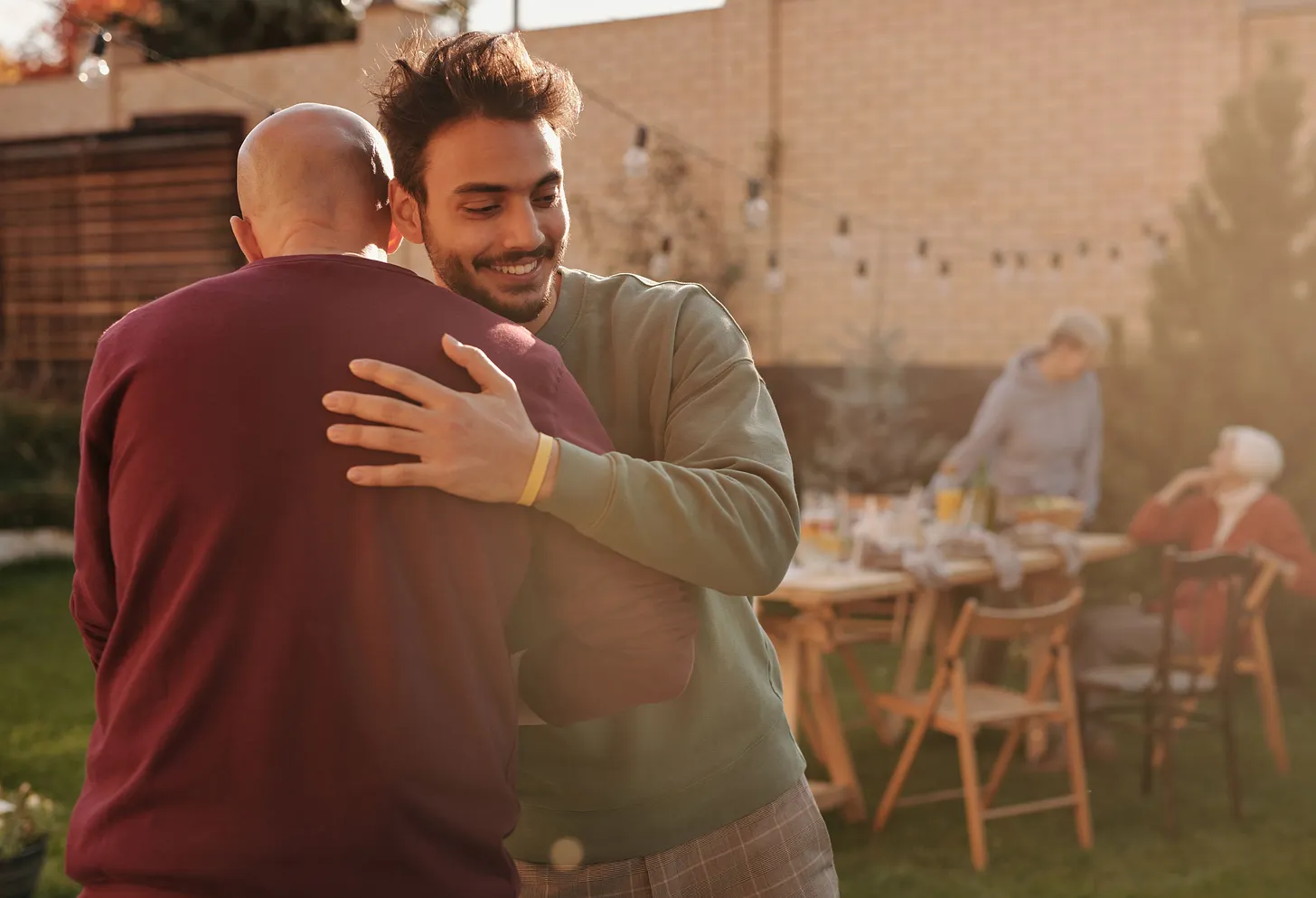
You don’t often think about Pride and caregiving going together. What do marches, rainbows, and Lady Gaga or Kylie Minogue on repeat share with the quiet workload of caring for an aging parent? Not much on the surface, it would seem.
But it’s the elements of being gay that you don’t see which I think have taught me a lot about caregiving. Yes, there is navigating medical complexity, but more importantly, comforting and showing respect to someone who is vulnerable while working through complex emotions, is what matters more.
In as much as there is no manual on caregiving, there also is none for how to be gay. Typical societal expectations around gender roles, career, family, and timelines don’t apply to you, so you get to forge your own path. You get to choose what your life looks like. You make up your own rules. You decide how to show up. But regardless of what you do, you do so with resilience, a sense of improvisation, and a little sparkle.
Building a Chosen Family

When I lived in San Francisco, my older neighbor had lived through the AIDS epidemic of the 80s and 90s, where he witnessed friends and loved ones die. Most poignantly, he said that when the doctors and nurses refused treatment, or when people were approaching death, it was their lesbian friends who took care of them. That type of collective reliance and resilience is what has shaped much of the gay community, and it is something we carry.
I personally experienced it in the midst of COVID when I broke my wrist in a cycling accident (to this day, Mum doesn’t know — I hide things from her too!) Living alone, unable to cook or do basic housework, my lesbian neighbors who I’d never interacted with before, took it upon themselves to bake me bread (remember when we were all making sourdough?) as well as home-made pasta. Their labradoodle gave me much comfort and to this day that are important members of my chosen family.
Many gay men and women do not find the acceptance they need from their families and communities when coming out. It sets them on a path to find others who are similar, and spaces where they can express their identities wholly without judgement or repercussions. And these spaces are crucial, because they are where you form a new type of family that embraces you entirely — or being adopted by one, as I was.
Subsequently, for many LGBTQ+ individuals the definition of family becomes broader, as you realize that those who understand and love you, and vice versa, can be found beyond the family and community you were born into.
But what does it mean for caregiving? It means that you know how to create close connections beyond the default care structures of your immediate relatives. It means being in a mindset of looking past labels and being open to new encounters that could lead somewhere unexpected — yet beautiful and beneficial.
And yet it also goes deeper still. I think at its core it means finding common ground and empathizing with the emotions that caregiving can bring up: fear, vulnerability, exhaustion, resentment, anger — and treating them with kindness and respect.
From this viewpoint, you can build relationships that support taking someone to an ER, making food for them when they haven’t the energy, talking about a nasty divorce, and planning for a shared afternoon over a cheese plate.
They might be small, but they build a shared community resilience that not just you, but everyone can call on. And when you’re caring for someone far away, you’ll definitely need those people to check in on your loved one. Or to be the person a worried son or daughter relies on.
Coming Out as Preparation for Tough Conversations
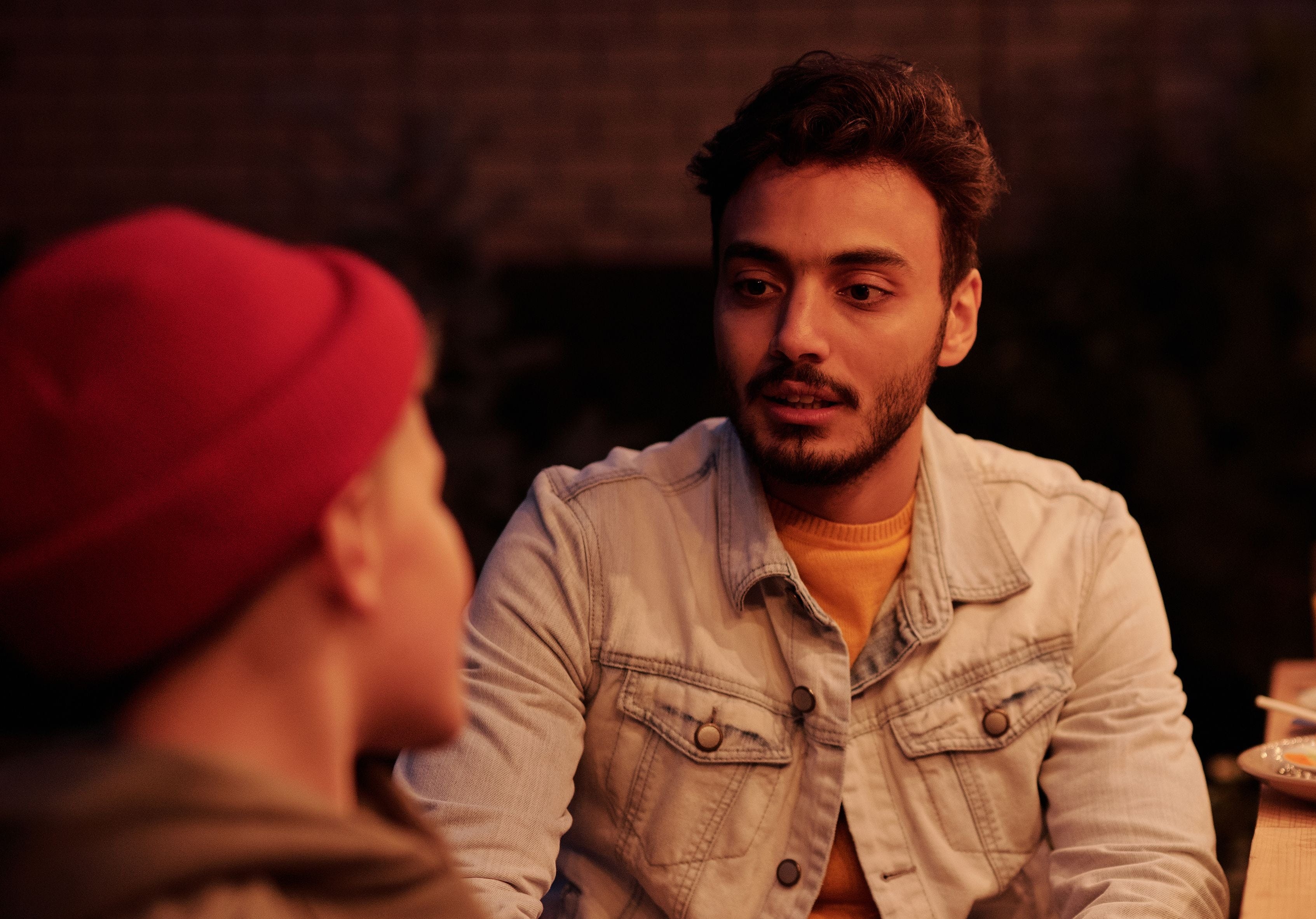
I can’t think of anyone I know who hasn’t had a difficult coming out story. Regardless of how it was received, the lead-up — the self-doubt, the vulnerability, and the courage it takes to share something core to your identity with those you love — is fraught with a storm of emotions. It feels fraught because once you say it, there’s no going back, and it has the potential to fundamentally change how those you love see you.
The bigness of coming out equips you with a sensitivity around how to communicate major events and news, and to handle them with the respect and empathy they deserve. It also means facing fears of the unknown and giving others the space to react and process new information in their own time. A cancer or Alzheimer’s diagnosis creates as much uncertainty and as many questions — and no one is going back to the world as it was before.
Health Literacy and Advocacy
The AIDS epidemic was a profound influence in shaping the modern gay experience, and in spite of health advances, it still forms a key part of gay culture and health. We call it part of our “herstory.”
Like any community, stories are shared, and there is a memory of a time when the community was being ravaged and no one came to help. It is where the gay advocacy and pride movement emerged, and it shapes how the LGBTQ+ community faces health matters.
For individuals, it means taking responsibility for your own health and that of your community members. It means being comfortable talking about health issues in a non-judgmental way, and having uncomfortable conversations. When it comes to working with medical professionals, it means knowing your stuff and having the confidence to ask questions and put across your viewpoint.
Part of that is finding providers who understand your needs, and there are physicians who cater specifically to the LGBTQ+ community. Many communities carry their own health considerations worth knowing — Ashkenazi Jewish couples, for instance, are routinely advised to screen for Tay-Sachs before having children. That’s not to say providers are generally insensitive to the specifics of individual communities, but the more you know and the more you know what to ask, the more confident you’ll be that you and your loved ones are getting the right care.
More specifically, it ties into an experience a close friend of mine had. In spite of having worked in pharmaceuticals for a decade, because she is a young-looking woman of color, her provider was dismissive of her, and she had to be vocal in advocating for the best treatment decision for her grandfather — having done her own thorough research into the relevant clinical studies.
Getting Your Legal Ducks in a Row
Part of the conversation with providers and health systems relates to having all your documentation in place. For example, gay marriage means having the legal right and responsibility to make health decisions for your spouse, as opposed to defaulting to direct family members who may not understand the full picture. Part of why my husband and I married was precisely this — to ensure that if something happened to either of us, the other would have the legal standing to make medical decisions, and that it couldn’t be taken away from us by anyone who felt our relationship didn’t count.
In a caregiving situation, legal documentation — advance medical directives, a Physician Order for Life-Sustaining Treatment (POLST), durable power of attorney, and a will — should all be in place before something happens. The legal grey zone and back-and-forth around gay marriage and children means the LGBTQ+ community is all too aware what happens if you don’t have the right legal documentation in place. The very existence of your relationship and the power you have to make decisions can be taken away from you at the worst possible moment — a nightmare for anyone especially caregivers.
Invisibility of the Male Caregiver

Much of what I’ve covered applies to all caregivers, and yet, even with all the work that men put into caregiving, much of it goes unseen.
There’s something to be said about the male caregiver — the one who is often invisible. AARP and the National Alliance for Caregiving estimate that roughly 60% of family caregivers are women, which still leaves a sizable share who are men. Yet how often do you hear men talk about caring for a wife with dementia, a parent in another state, or a neighbor going through cancer treatment?
Male caregivers don’t fit the stereotype of what a man “should be” — even though the work and emotional toll are incredibly demanding. It is regarded as a woman’s work, and I suspect it pushes men towards the sidelines. I think the invisibility is also in part because male caregivers don’t announce themselves, perhaps because there is no obvious space where they can.
For gay men who can “pass” as straight, it is also easy not to draw attention — and for some, that’s absolutely fine. But Pride gives all gay men an opportunity to celebrate their identity, and perhaps we need something like that for male caregivers too. A place where they can be proud of their caregiving role and identities, and a place where they can be acknowledged and celebrated.
Conclusion
Being gay often means not having a roadmap. It means being adaptable, resilient, resourceful, and improvising when the tables turn. Sound familiar? Being a family caregiver is no different. You know exactly what I’m talking about. It just so happens that my style of caregiving is set to the soundtrack of Kylie, with some rainbows, and a little sparkle 🌈✨
Join me at care4caregivers.substack.com for more stories, tools, and truths from the frontlines of caregiving.




Thanks for joining the Carevation list.

Carevation is a digital platform that helps caregivers manage appointments, medications, and the daily work of care — all in one place.

