


Back to all blogs
Aging, Activism, and the Unseen Care Needs of LGBTQIA+ Elders
The unseen care needs of LGBTQ+ elders shaped by the AIDS crisis, community loss, and decades of resilience.
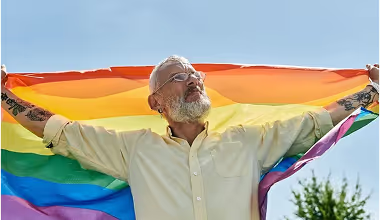
As Pride Month comes to a close, I wanted to reflect on a topic that rarely gets the attention it deserves: eldercare in the LGBTQIA+ community.
This article focuses primarily on aging in the gay male and lesbian community, because that’s the perspective I know best. I’ve drawn from personal experience and the communities I’ve been closest to. I want to acknowledge that within the broader LGBTQIA+ community, there are many layers and intersections—each group carrying its own histories, challenges, and triumphs. I’m not here to speak for all of them. But I hope to continue learning from others who are willing to share their stories.
A Legacy of Survival, a New Phase of Life
When I think about the enormous strides the gay and lesbian community has made in visibility, rights, and cultural acceptance, much of it can be traced back to a generation of men and women whose activism reshaped history—particularly those who came of age during the AIDS crisis.
You can’t talk about the advancement of gay rights without talking about AIDS. And you can’t talk about the aging gay community without recognizing the physical, emotional, and societal scars that epidemic left behind.
Elder gay men today lived through a time when simply being who they were carried risk—of rejection, arrest, violence, and abandonment. And then came AIDS, which decimated their communities, took away their partners and friends, and left many to face the trauma in silence.
The role of lesbians during this time cannot be understated as they played an instrumental role caring for the sick when the health system refused to treat those with the ‘gay plague’. They too bear their own traumas of being witness to so much illness and death.
And yet—they endured. They built communities. They demanded care. And they helped turn AIDS from a death sentence into a chronic, manageable condition.
“I never see new HIV cases anymore,” a gay physician recently told me. Even in my own lifetime, I couldn’t have foreseen the incredible progress in the medical management of HIV and AIDS.
But for those who lived through the worst of it, those advances arrived too late to prevent deep and lasting impact. Many are still here—living with HIV, managing complex care, navigating systems that never fully saw them.
The Realities of Aging in the Gay Community
We don’t often hear about gay elders. Yet they are here—aging, adapting, and carrying the weight of a history that shaped the very freedoms many of us benefit from today.
So what happens as they grow older and need care?
Here are just a few of the challenges they face:
🧍 Social Isolation & Loss of Support Networks
Many LGBTQIA+ elders lost friends, partners, and entire support systems during the AIDS crisis.
- Up to 50% live alone, compared to 33% of the general older population.
- Without children or traditional family advocates, they often rely on a chosen family, which may not be recognized in medical or legal settings.
🏥 Fear of Discrimination in Healthcare
LGBTQIA+ elders often avoid disclosing their identities to providers.
- 1 in 3 report hiding their sexuality or gender identity from clinicians.
- Trans elders may delay or avoid healthcare due to long histories of medical discrimination, misgendering, or refusal of care.
- Some fear being forced “back into the closet” in nursing homes or long-term care facilities.
🧬 Living with HIV in Later Life
- Over 50% of people with HIV in the U.S. are over age 50.
- Many survivors now face coexisting chronic illnesses—and struggle to find providers equipped to manage HIV and aging.
- The emotional toll includes survivor’s guilt, PTSD, and lingering grief from their experiences during the AIDS crisis.
🧠 Mental Health & Invisible Trauma
Years of stigma, secrecy, and exclusion compound over time.
- 39% of LGBTQIA+ elders experience mental health challenges vs. 17% of heterosexual, cisgender peers.
- Lesbian elders may carry the weight of lifelong emotional labor and caregiving without public recognition.
- Trans elders often face persistent mental health struggles due to gender dysphoria, social isolation, and lack of safe community spaces.
⚖️ Legal & Financial Vulnerability
Denied spousal rights and protections for much of their lives, many LGBTQIA+ elders have fewer financial resources.
- 22% of LGBTQ+ women and 13% of LGBTQIA+ men live below the poverty line (vs. 9% of heterosexual peers).
- For many lesbian and bisexual women, lower lifetime earnings, caregiving burdens, and the lack of recognized legal partnerships (until recently) have contributed to significant financial precarity in later life.
- Trans elders, particularly trans women of color, are at high risk of housing insecurity, unemployment, and discrimination in long-term care settings—often leading to delayed or denied services.
Personal Reflection: The End of an Era
This year marks the final AIDS/LifeCycle Ride, the annual fundraising event where thousands of cyclists ride from San Francisco to Los Angeles to support HIV/AIDS services.
I rode it once. It was a moving, beautiful experience—where I met incredible friends, a resilient community, and my spouse.
The end of this event feels symbolic. A generation that once had to fight for every scrap of visibility and care is now aging. Quietly. Sometimes invisibly. And the systems we have aren’t yet ready to support them.
Why This Matters
The challenges LGBTQIA+ elders face point to something larger: how poorly our systems care for those who have historically been marginalized.
Their health carries a legacy—of neglect, of exclusion, of trauma, and of survival. And while we celebrate Pride and progress, we must also look inward at how we support the people who carried that progress forward.
Imagine fighting so hard for your rights, only to be forced back into the closet in your twilight years.
These men and women—and the broader LGBTQIA+ elder community—deserve more than respect. They deserve care that understands where they’ve been, and what they’ve carried to get here.
They fought for us. We owe them the care and dignity they’ve long been denied.
Join me at care4caregivers.substack.com for more stories, tools, and truths from the frontlines of caregiving.




Thanks for joining the Carevation list.

Carevation is a digital platform that helps caregivers manage appointments, medications, and the daily work of care — all in one place.

